How to Write Meta Descriptions That Get Clicks
 Anna Novak
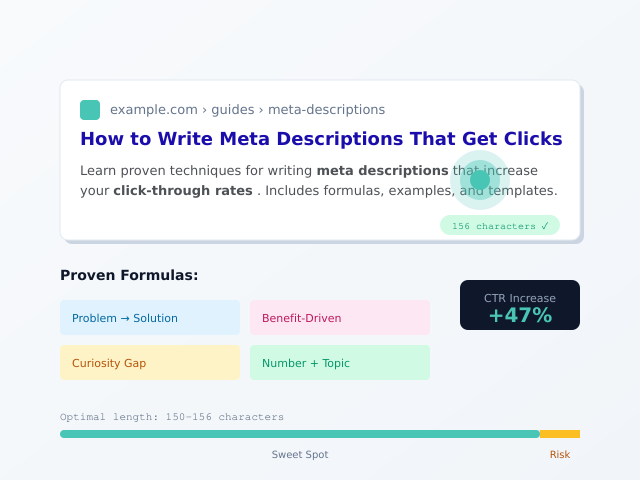
Meta descriptions are your website’s sales pitch in search results. These short text snippets appear beneath page titles and directly influence whether searchers click your link or scroll past to a competitor. Despite being a small element, meta descriptions significantly impact your organic click-through rates and overall search traffic.
This guide teaches you how to write meta descriptions that compel clicks. You’ll learn optimal length, proven formulas, and techniques for different page types. By the end, you’ll create descriptions that turn impressions into visits.
What Is a Meta Description?
A meta description is an HTML attribute that summarizes a webpage’s content. Search engines display this text in search results beneath the clickable title link. While meta descriptions don’t directly affect rankings, they dramatically influence click-through rates — which indirectly impacts SEO performance.
Here’s how a meta description appears in HTML:
<meta name="description" content="Your compelling meta description goes here.">When someone searches Google, they see your title, URL, and meta description. In those few seconds, they decide whether your page deserves their click. A well-crafted description can double your click-through rate compared to a generic one.
Why Meta Descriptions Matter for SEO
Although Google confirmed that meta descriptions aren’t a ranking factor, they remain crucial for several reasons.
Click-Through Rate Impact
Higher click-through rates signal to search engines that your result satisfies searcher intent. Over time, pages with strong CTR may see ranking improvements as engagement metrics influence algorithmic assessments. Consequently, compelling meta descriptions indirectly support your SEO efforts.
First Impression Control
Without a specified meta description, Google generates one automatically by pulling text from your page. This auto-generated snippet rarely represents your content optimally. Taking control ensures searchers see exactly the message you intend.
Keyword Highlighting
When search terms appear in your meta description, Google bolds them in results. This visual emphasis draws attention to your listing. Including relevant keywords naturally makes your result more noticeable and relevant-looking.
Optimal Meta Description Length
Meta description length requires balancing completeness with brevity. Too short wastes valuable real estate; too long gets truncated.
Character Limits
| Platform | Recommended Length | Maximum Before Truncation |
|---|---|---|
| Google Desktop | 150-160 characters | ~160 characters |
| Google Mobile | 120-130 characters | ~130 characters |
| Bing | 150-160 characters | ~160 characters |
For most pages, aim for 150-156 characters. This length displays fully on desktop while remaining readable on mobile. Front-load important information so truncation doesn’t cut critical messaging.
Pixel Width Consideration
Technically, Google measures descriptions by pixel width rather than character count. Wide characters like “W” consume more space than narrow ones like “i”. However, character counting remains practical for planning. Use our Word Counter to check character counts while writing.
Meta Description Formulas That Work
Effective meta descriptions follow proven patterns. These formulas provide starting points you can adapt to your content.
The Problem-Solution Formula
Structure: [Problem]? [Solution]. [Benefit/CTA].
Example: “Struggling with low conversion rates? Learn 15 proven CRO techniques that increased our clients’ sales by 40%. Free checklist included.”
This formula works because it immediately resonates with searchers experiencing the problem, then promises a solution.
The Benefit-Driven Formula
Structure: [Action verb] + [Benefit] + [Timeframe/Specificity].
Example: “Discover how to write headlines that double your click-through rates. Includes 50+ templates and real examples from top-performing content.”
Leading with benefits rather than features captures attention faster.
The Curiosity Gap Formula
Structure: [Intriguing statement] + [Partial reveal] + [Promise of more].
Example: “The email subject line trick that increased our open rates by 73%. Most marketers overlook this simple technique — here’s how it works.”
This formula creates information gaps that compel clicks to satisfy curiosity.
The List/Number Formula
Structure: [Number] + [Topic] + [Qualifier/Benefit].
Example: “12 meta description examples that actually get clicks. Analyzed 1,000+ top-ranking pages to find what works in 2026.”
Numbers attract attention and set clear expectations about content depth.
The Question Formula
Structure: [Question matching search intent]? [Answer preview] + [Value add].
Example: “What’s the ideal meta description length? We analyzed Google’s display patterns to find the sweet spot — plus templates you can copy.”
Questions mirror the searcher’s mental state, creating immediate relevance.
Writing Meta Descriptions for Different Page Types
Different pages serve different purposes, requiring tailored meta description approaches.
Homepage
Your homepage description should communicate your brand’s core value proposition. Focus on what makes you unique and who you serve.
Example: “CleverUtils provides free marketing tools that simplify complex tasks. UTM builders, ROI calculators, schema generators — no signup required.”
Product Pages
Product descriptions should highlight key benefits, specifications, and unique selling points. Include pricing if competitive.
Example: “Premium wireless headphones with 40-hour battery life and active noise cancellation. Free shipping on orders over $50. 30-day money-back guarantee.”
Blog Posts
Article descriptions should preview the content’s value and hint at the depth of coverage. Match the searcher’s learning intent.
Example: “Learn how to calculate marketing ROI with step-by-step formulas and real examples. Includes benchmarks by channel and a free calculator.”
Category Pages
Category descriptions should explain what products or content the category contains and why users should browse it.
Example: “Browse our collection of SEO tools and guides. From schema markup generators to meta tag creators — everything you need for technical SEO.”
Service Pages
Service descriptions should communicate the transformation or outcome clients receive. Address the primary pain point.
Example: “Professional SEO audits that identify exactly why you’re not ranking. Get a prioritized action plan within 5 business days. Free consultation.”
Meta Description Best Practices
Beyond formulas, several principles consistently improve meta description performance.
Include Your Primary Keyword
When your target keyword appears in the meta description, Google bolds it in search results. This visual emphasis increases visibility. However, avoid awkward keyword stuffing — the description must read naturally.
Use Active Voice
Active voice creates more compelling, direct messaging. Compare these examples:
- Passive: “Marketing ROI can be calculated using our free tool.”
- Active: “Calculate your marketing ROI instantly with our free tool.”
Active voice feels more immediate and actionable.
Include a Call-to-Action
Tell readers what to do next. Phrases like “Learn how,” “Discover,” “Get started,” or “Find out” prompt action. Even subtle CTAs outperform descriptions that merely summarize content.
Match Search Intent
Your description must align with what searchers actually want. For informational queries, promise valuable knowledge. For transactional queries, emphasize product benefits and purchasing ease. Mismatched intent causes high bounce rates even if you win the click.
Create Urgency When Appropriate
For time-sensitive content or offers, urgency increases click-through rates. Phrases like “2026 updated,” “limited time,” or “before it’s too late” motivate immediate action. Use sparingly to maintain credibility.
Avoid Duplicate Descriptions
Every page deserves a unique meta description. Duplicates across pages waste opportunities and can confuse search engines about which page to rank for specific queries. If you can’t write unique descriptions for all pages, prioritize high-traffic pages and leave others to auto-generation.
Common Meta Description Mistakes
Avoiding these errors immediately improves your meta descriptions.
Being Too Vague
Generic descriptions like “Welcome to our website” or “Learn more about our services” provide no reason to click. Specificity wins attention.
Bad: “We offer marketing services for businesses.”
Good: “Data-driven marketing services that increased client revenue by an average of 127% in 2025. Free strategy session available.”
Keyword Stuffing
Cramming keywords destroys readability and looks spammy. Search engines may even ignore over-optimized descriptions.
Bad: “Best meta descriptions, meta description tips, how to write meta descriptions, meta description examples, meta description length.”
Good: “Write meta descriptions that get clicks. Learn optimal length, proven formulas, and see real examples from top-ranking pages.”
Exceeding Length Limits
Truncated descriptions look unprofessional and may cut off important information. Always preview how your description will appear.
Making False Promises
Clickbait descriptions might win clicks but destroy trust when content doesn’t deliver. High bounce rates signal poor quality to search engines. Always accurately represent your page content.
Forgetting Mobile Users
Mobile truncation occurs earlier than desktop. If most of your traffic comes from mobile devices, prioritize shorter descriptions or front-load critical information.
Meta Description Examples by Industry
These real-world examples demonstrate effective meta descriptions across different sectors.
E-commerce
| Page Type | Example Description |
|---|---|
| Product | Organic cotton t-shirt in 12 colors. Ethically made, incredibly soft. Free returns within 60 days. Ships worldwide in 3-5 days. |
| Category | Shop men’s running shoes from top brands. Filter by cushioning, support level, and terrain. Free shipping on orders over $75. |
| Sale | Summer clearance: up to 60% off outdoor furniture. 200+ items marked down. Sale ends Sunday — shop now while stock lasts. |
SaaS / Software
| Page Type | Example Description |
|---|---|
| Homepage | Project management software that teams actually enjoy using. Trusted by 50,000+ companies. Start free — no credit card required. |
| Feature | Automate repetitive tasks with custom workflows. Save 10+ hours weekly on manual work. See how it works in our 2-minute demo. |
| Pricing | Simple, transparent pricing starting at $9/user/month. All features included. Compare plans and start your 14-day free trial. |
Content / Publishing
| Page Type | Example Description |
|---|---|
| How-to | Step-by-step guide to writing meta descriptions that increase CTR. Includes templates, examples, and a free character counter tool. |
| Listicle | 27 email marketing statistics every marketer should know in 2026. Data from 1M+ campaigns reveals what actually drives opens and clicks. |
| Review | Honest review of Ahrefs after 3 years of daily use. Pros, cons, pricing breakdown, and who it’s best for. Updated February 2026. |
Testing and Optimizing Meta Descriptions
Writing effective meta descriptions requires ongoing testing and refinement.
Monitor Click-Through Rates
Google Search Console shows CTR for your pages in search results. Compare CTR across similar pages to identify which descriptions perform best. Low CTR despite good rankings indicates description problems.
A/B Test Descriptions
Change descriptions for underperforming pages and monitor CTR changes over 2-4 weeks. Test different angles, formulas, or CTAs to discover what resonates with your audience.
Analyze Competitor Descriptions
Search your target keywords and study competing descriptions. Note what makes certain listings compelling. Identify gaps or angles competitors miss that you could own.
Track SERP Changes
Google sometimes rewrites meta descriptions if they don’t match search intent well. If Google consistently ignores your description, rewrite it to better address what searchers want.
Tools for Writing Meta Descriptions
Several tools simplify meta description creation and optimization.
Character Counters
Check description length before publishing. Our Word Counter shows character counts in real-time, helping you stay within optimal limits.
Meta Tag Generators
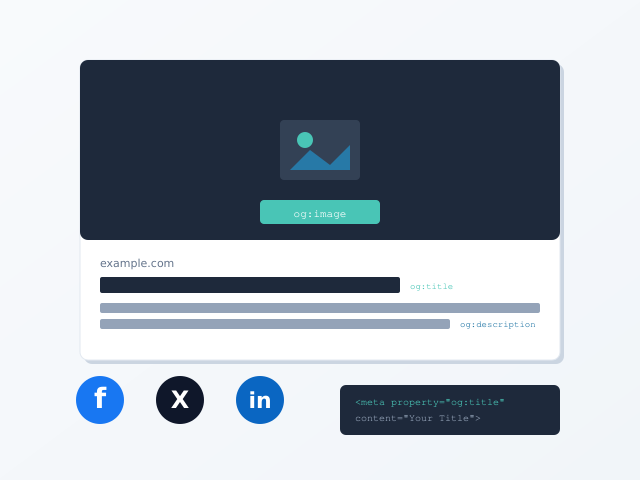
Generate properly formatted meta tags automatically. Our Meta Tags Generator creates meta description HTML along with Open Graph and Twitter Card markup — just enter your text and copy the code.
SERP Preview Tools
Preview how your title and description will appear in search results before publishing. These tools show truncation points and help optimize for visual impact.
SEO Plugins
WordPress plugins like Yoast SEO and Rank Math provide dedicated fields for meta descriptions with length indicators and optimization suggestions.
Meta Descriptions and AI Search
As AI-powered search features like Google’s Search Generative Experience evolve, meta descriptions remain relevant but serve additional purposes.
AI Content Selection
AI systems use meta descriptions alongside page content to understand and summarize pages. Clear, accurate descriptions help AI features correctly represent your content in generated responses.
Featured Snippet Influence
Well-structured meta descriptions can influence featured snippet selection, though Google primarily pulls snippet content from page body text. Descriptions that clearly answer specific questions may be favored.
Human Decision Point
Even with AI summaries, users often click through to sources. Your meta description remains the deciding factor in whether users choose your page over alternatives cited in AI responses.
Key Takeaways
Writing meta descriptions that get clicks requires understanding searcher psychology and search engine display mechanics. Remember these essential points:
- Keep descriptions 150-156 characters: Long enough to be compelling, short enough to avoid truncation
- Use proven formulas: Problem-solution, benefit-driven, curiosity gap, numbers, and questions all work
- Include keywords naturally: Bolded terms attract attention without stuffing
- Match search intent: Align your message with what searchers actually want
- Add calls-to-action: Tell readers what they’ll gain by clicking
- Write unique descriptions: Every important page deserves custom copy
- Test and iterate: Monitor CTR and refine descriptions that underperform
Start Writing Better Meta Descriptions
Effective meta descriptions combine strategic thinking with compelling copywriting. Use the formulas and examples in this guide as starting points, then test what works best for your audience.
Need help with character counts? Our Word Counter tracks characters in real-time as you write. For generating complete meta tag markup, use our Meta Tags Generator to create properly formatted HTML including Open Graph tags for social sharing.